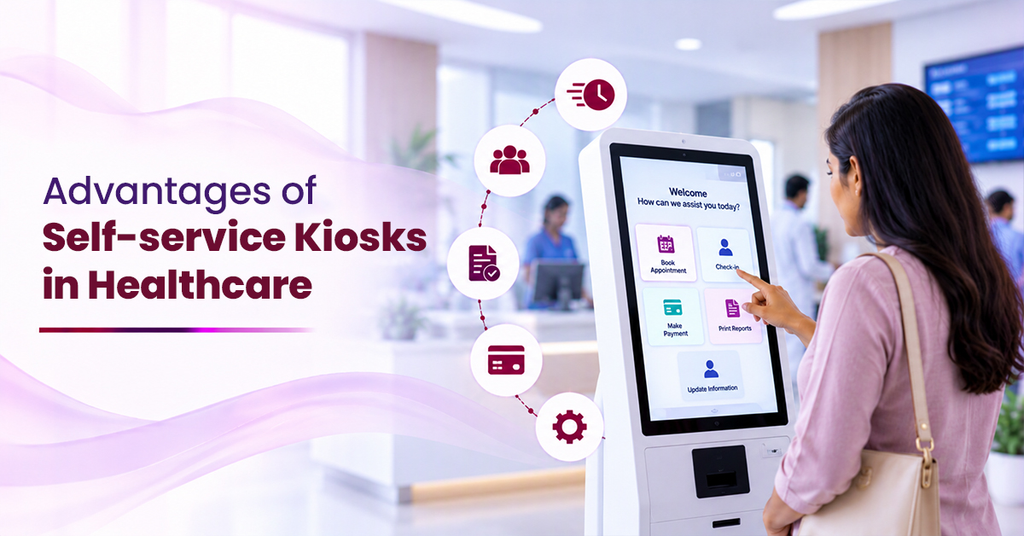
Self-service kiosks are digital, interactive terminals that allow patients to complete routine hospital tasks independently, without relying entirely on reception staff.
Self-service kiosks are becoming an important part of hospital administration by simplifying patient access to essential services. From a healthcare operations perspective, these digital terminals help streamline outpatient registration, appointment check-in, queue token generation, and billing, reducing the administrative burden on front-desk teams.
In high-volume hospitals, they can improve patient flow by minimizing repetitive manual processes and supporting more efficient use of staff resources. When integrated with hospital management software, healthcare kiosks can also facilitate accurate information exchange across administrative workflows. Their real value lies in improving operational efficiency while maintaining a patient-centered approach to care.
Major Benefits of Self-Service Kiosks for Hospitals
Here are the key advantages of self-service kiosks in healthcare facilities.
1. Operational and Administrative Benefits
Direct-Source Demographic and Clinical Intake
Standardized self-service terminals allow patients to directly input, verify, and update demographic and insurance details at the point of entry, eliminating manual front-desk entry dependencies and transcription errors.
Administrative Resource Reallocation
Automating high-volume, routine intake tasks including appointment verification, arrival logging, and preliminary digital form execution alleviates administrative overhead, allowing front-office personnel to pivot toward complex care coordination and direct patient escalation requests.
Improved Data Accuracy
Patients can enter or verify their own information, reducing errors associated with manual data entry and repeated transcription.
Dynamic Patient Flow Control and Tokenization
Integrated kiosk terminals dynamically issue digitally indexed queue tokens and execute algorithmic patient triage, directing traffic directly to assigned clinical suites, diagnostic labs, or billing modules to maintain optimal facility throughput.
Better Staff Productivity
By reducing repetitive administrative work, kiosks help hospital staff allocate more time to patient assistance and other essential responsibilities.
Reduced Paperwork
Digital registration forms, consent forms, and questionnaires can replace many paper-based processes, making information easier to store and retrieve.
2. Patient Experience and Convenience
24/7 Self-Service Availability
Depending on the facility and kiosk configuration, patients may be able to access selected services outside regular reception hours.
Multilingual Support
Kiosks can offer multiple language options, helping patients navigate registration and appointment processes in a language they understand.
Greater Transparency
Patients can receive appointment confirmations, queue tokens, payment receipts, and visit instructions directly through the hospital kiosk.
Improved Patient Satisfaction
Faster check-in, clear instructions, and reduced dependence on reception counters can contribute to a more convenient hospital experience.
3. Financial and Resource Management Benefits
Swift Payment Processing
Payment-enabled healthcare kiosks let patients quickly settle consultation fees and eligible hospital bills using their preferred payment methods.
Reduced Administrative Costs
Automating repetitive transactions can reduce paper consumption and staff time spent on routine processing, although actual savings depend on implementation costs and adoption.
Improved Payment Collection
Kiosks integrated with hospital billing systems can help patients settle outstanding balances during their visit.
Better Resource Allocation
Digital check-in and queue information can help administrators understand patient volumes and distribute staff more effectively.
Scalable Service Delivery
Hospitals can expand kiosk availability across registration areas, outpatient departments, diagnostic centers, and other high-traffic locations as operational needs grow.
Improved Operational Monitoring
When connected to an HMS, kiosks can contribute to centralized reports on registrations, transactions, and service utilization, supporting better operational decisions.
4. Integration and Digital Healthcare Benefits
Seamless HMS Integration
Integration with a hospital management system connects kiosk activities with patient registration, appointment scheduling, billing, and other supported hospital workflows.
Real-Time Appointment Verification
With suitable system integration, kiosks can verify scheduled appointments and display relevant visit information.
Automated Appointment Booking
Depending on the HMS software, patients may be able to book, reschedule, or cancel appointments directly through the kiosk.
Digital Form and Consent Management
Patients can complete pre-consultation questionnaires and review, or sign supported consent forms electronically.
Automated Notifications and Reminders
Connected systems can support appointment confirmations, reminders, and updates about schedule changes through configured communication channels.
Contactless Healthcare Workflows
Patients can handle registration and payments digitally, minimizing unnecessary physical contact in crowded hospital spaces.
Enhanced Reporting and Analytics
Aggregated kiosk usage and transaction data can help hospitals identify peak hours, common bottlenecks, and opportunities for workflow improvement.
5. Security, Accessibility, and Patient Support
Controlled Access to Patient Information
Secure authentication and appropriate access controls can help ensure that users access only the information and functions they are authorized to use.
Improved Patient Privacy
Patients can enter certain personal details privately rather than communicating with them aloud at a busy reception counter. Privacy safeguards remain essential.
Accessibility Features
Adjustable text sizes, clear instructions, suitable screen placement, and accessible interface design can make kiosks easier for patients with different needs to use.
Consistent Service Delivery
Standardized digital workflows help hospitals provide a more consistent registration and check-in process across departments.
Reduced Dependence on Manual Processes
Kiosks can handle selected routine transactions even during busy periods, helping hospitals manage patient volumes more systematically.
Final Thoughts
The benefits of self-service kiosks in healthcare are more than just digital check-in terminals. They can help healthcare facilities improve patient flow, simplify administrative processes, support digital payments, and create a more organized hospital experience.
From a healthcare management perspective, self-service kiosks can also support better patient navigation across OPDs, diagnostic units, and billing departments, particularly in multispecialty hospitals with high daily footfall. By providing patients with clear instructions and a consistent check-in process, hospitals can reduce confusion during peak hours and improve coordination between service points.
When evaluating solutions such as Ezovion, healthcare providers should consider how digital workflows align with hospital-specific requirements, patient accessibility, and operational priorities to deliver a more efficient and patient-centered care environment.