A hospital never really switches off. While doctors treat patients, someone must order supplies, someone must process payments, and someone must make sure the right people are on duty. When these jobs depend on separate tools, notes, and phone calls, small gaps quickly turn into big delays.
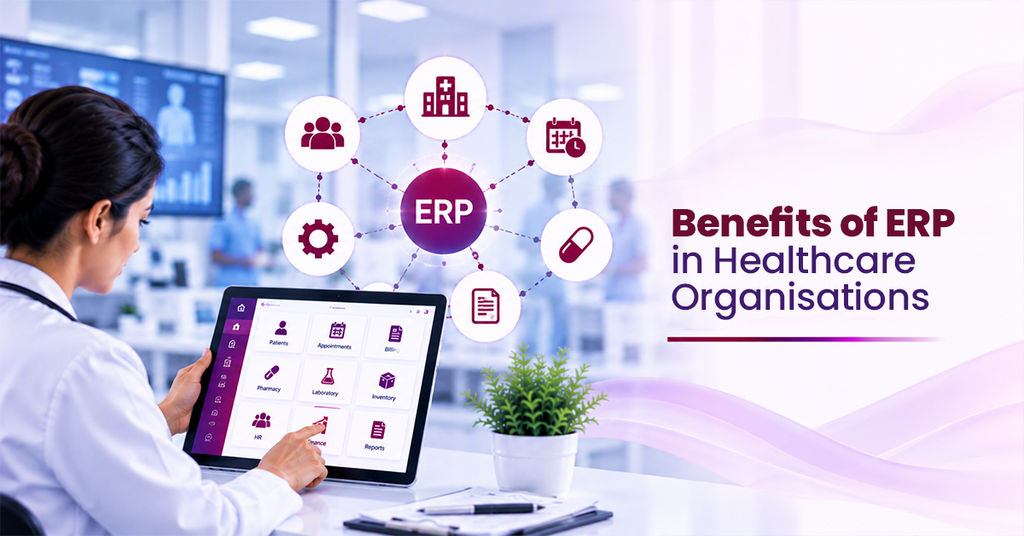
This is why more hospitals are turning to ERP in healthcare. ERP, or Enterprise Resource Planning, is software that links your money, people, stock and reports in one shared system. Think of a hospital ERP as a single control room, where every department can see what is happening and act on the same information.
Here are seven practical benefits of ERP in healthcare that show why it is worth a closer look.
1. Everyone Works from the Same Information
Imagine the finance team using one list of figures while the stores team uses another. Sooner or later, someone makes a decision based on out-of-date data.
With ERP, every department draws from the same live records. If a purchase is approved, a payment is made or a new employee joins, the system updates for everyone at once. This saves time spent double-checking facts and brings an end to those awkward “my report says something different” conversations. Teams can focus on action instead of reconciliation.
2. Lower Running Costs
Behind every patient visit sits a lot of paperwork. Depending on the country, administration is often estimated to account for around 15% to 30% of healthcare spending.
An ERP takes over repetitive tasks, including entering data, sending approval requests and preparing monthly summaries. What once needed several people and several days can often be done automatically. Less manual effort means lower staffing pressure, reduced printing and storage needs, and fewer costly mistakes. The money saved can be put back into care, equipment or training.
3. Smarter Stock and Supply Management
Medical supplies are a balancing act. Too little, and treatment can be delayed. Too much, and cash is locked away in items that may expire before they are used.
A hospital ERP keeps a live count of what is in each store and ward. It alerts the team when stock is running low and flags items approaching their expiry date. Orders can be planned in advance and placed at the right time, which also helps you negotiate better prices with suppliers. Fewer last-minute purchases mean fewer unnecessary expenses.
4. More Accurate Billing, Quicker Payments
Billing errors are frustrating for patients and expensive for hospitals. A forgotten test or a wrongly entered code can mean lost income or an unhappy customer.
When ERP is connected to your HMS software, every service delivered is captured and sent straight to the bill. There is no retyping, and no reliance on someone remembering to add a charge later. Invoices become more accurate, insurance claims face fewer rejections, and payments tend to arrive faster. A healthier cash flow gives the hospital more room to plan ahead.
5. Simpler Staff Scheduling and Payroll
Hospital rotas are complicated. Shifts overlap, people take leave, and emergencies do not follow a timetable.
ERP brings schedules, attendance, leave, overtime and payroll into one view. Managers can spot shortages early and arrange cover without panic. Staff are paid correctly and on time, and important records, such as licences and training dates, are easy to track. When employees feel well organised and fairly treated, they are more likely to stay, which saves the cost of constant recruitment.
6. Better Protection of Sensitive Data
Patient and financial information must be handled with great care. A single data leak can damage trust and lead to serious penalties.
An ERP lets you decide exactly who can see or edit each type of information. Every action is recorded, so you always know who did what and when. When auditors or regulators ask for proof, you can pull together the reports quickly instead of searching through piles of files. This makes compliance less stressful and gives management confidence that the hospital is operating responsibly.
7. Clear Insight for Better Planning
Strong leadership relies on facts. Yet many hospitals still wait until the end of the month to see how they are performing.
ERP dashboards give an instant view of key figures such as income, spending, bed occupancy and departmental activity. If one area is overspending or another is underused, you will spot it early. Decisions about hiring, buying new equipment or opening a new service can then rest on solid evidence. Over time, this builds a culture of planning rather than constant firefighting.
Conclusion
The advantages of ERP in healthcare go well beyond keeping records tidy. It brings people, processes and information together, helping hospitals cut waste, avoid errors and make confident decisions. When combined with reliable HMS software, it gives a complete view of patient care and business health at the same time.
If your teams still rely on scattered tools and manual work, this could be the right time to look at a hospital ERP. Begin by noting the tasks that cause the most delay or frustration, then compare them with the seven benefits above. That simple step can point you towards a smoother, more efficient way of running your hospital.