
Healthcare leaders across the world face relentless pressure to improve patient outcomes while controlling operational costs. Hospitals now manage rising patient volumes, increasing chronic disease cases, workforce shortages, and stricter regulatory expectations. At the same time, patients expect faster diagnoses, shorter waiting times, and highly personalised care experiences. These challenges continue to push healthcare providers towards digital transformation strategies that deliver measurable clinical and financial results.
Many hospitals now invest in smart CDSS solutions because traditional workflows no longer support modern care demands. Clinicians often spend valuable time navigating fragmented records, reviewing incomplete patient histories, and managing administrative bottlenecks. These inefficiencies directly affect treatment timelines and patient safety.
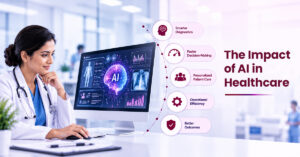
An advanced Clinical Decision Support System helps hospitals overcome these operational barriers by delivering real-time clinical insights, predictive analytics, and intelligent automation. Modern AI-powered CDSS platforms analyse large volumes of patient data within seconds and support clinicians with evidence-based recommendations that accelerate treatment decisions.
Healthcare executives increasingly recognise that AI-powered CDSS for hospitals drives both clinical excellence and financial sustainability. Organisations that deploy intelligent systems now improve workflow speed, reduce avoidable delays, and strengthen care coordination across departments. As a result, healthcare leaders continue to evaluate the ROI of AI in hospitals as part of broader digital transformation initiatives.
The Growing Impact of Treatment Delays in Modern Hospitals
Healthcare systems worldwide continue to face mounting operational complexity. Emergency departments frequently operate beyond capacity, clinicians manage heavier caseloads, and administrative tasks consume substantial clinical time. These challenges create serious treatment delays that affect patient safety and hospital performance.
Many healthcare organisations now search for the best clinical decision support system for hospitals because manual decision-making processes slow clinical operations. Delayed diagnosis, fragmented communication, and inconsistent workflows often increase patient risk while extending hospital stays.
Hospitals also experience difficulties coordinating care across departments. Physicians, nurses, radiologists, pharmacists, and specialists often rely on disconnected systems that create information gaps. Consequently, hospitals continue to seek advanced hospital workflow optimisation software that enables faster and more coordinated decision-making. Healthcare providers increasingly adopt healthcare AI implementation solutions because traditional systems cannot manage today’s data-intensive clinical environments. Intelligent automation now plays a critical role in helping hospitals improve speed, efficiency, and patient outcomes.
How Smart CDSS Solutions Transform Clinical Decision-Making
• Evolution of the Clinical Decision Support System
- The modern Clinical Decision Support System has evolved far beyond basic alert systems.
- Earlier platforms mainly generated static reminders and simple rule-based notifications.
- Today, AI-powered CDSS platforms deliver predictive intelligence, machine learning capabilities, and real-time clinical recommendations that support faster interventions.
• How Modern Smart CDSS Solutions Improve Clinical Accuracy
- Modern smart CDSS solutions analyse patient histories, laboratory reports, imaging results, medication records, and real-time monitoring data simultaneously.
- This capability allows clinicians to identify risks earlier and make more accurate treatment decisions.
• Benefits of Smart CDSS in Hospitals
- Healthcare providers increasingly understand the benefits of smart CDSS in hospitals because intelligent systems reduce uncertainty during high-pressure clinical situations.
- Hospitals now use predictive algorithms to identify deterioration risks, detect sepsis early, and prioritise emergency interventions before complications escalate.
• AI-Driven Smart Hospitals and Intelligent Clinical Automation
At the same time, AI-driven smart hospitals continue to adopt intelligent systems that automate routine clinical processes and reduce dependency on manual workflows. This transition enables clinicians to focus more directly on patient care.
Also Read – The $16 Billion Opportunity: How AI-Driven CDSS Is Redefining Hospital ROI & Patient Outcomes – Ezovion.
How AI-Powered CDSS Reduces Treatment Delays – Real-Time Intelligence Accelerates Clinical Response
One of the greatest strengths of AI-powered CDSS for hospitals lies in its ability to process large volumes of data instantly. Clinicians no longer need to manually review fragmented information across multiple systems. Instead, the platform consolidates critical insights into a unified clinical view. Hospitals increasingly recognise how AI-powered CDSS reduces treatment delays because clinicians receive faster access to patient histories, medication interactions, risk scores, and recommended care pathways. This real-time intelligence significantly shortens diagnostic and treatment timelines.
Advanced smart CDSS solutions also support emergency departments by automatically prioritising critical cases. Intelligent triage systems analyse symptoms, vital signs, and clinical histories within seconds, enabling faster intervention during emergencies. Healthcare organisations that deploy predictive AI for hospitals frequently achieve better operational outcomes because predictive analytics identifies high-risk patients before conditions worsen. These proactive interventions help hospitals prevent avoidable complications and reduce intensive care admissions.

AI-Powered CDSS and Emergency Care Optimisation
Emergency departments require rapid decision-making under immense pressure. Delayed responses can directly affect patient survival rates. Modern AI-powered CDSS platforms now support emergency clinicians with real-time alerts, predictive insights, and automated treatment recommendations.
Hospitals continue to adopt intelligent clinical automation because automated workflows reduce administrative burdens during emergency situations. Clinicians can immediately access imaging reports, laboratory findings, and patient histories without manual data retrieval.
The benefits of smart CDSS in hospitals become especially visible in critical care environments where rapid intervention remains essential. Predictive algorithms help clinicians detect sepsis, cardiac complications, respiratory deterioration, and neurological emergencies much earlier than traditional methods. Healthcare providers also use hospital workflow optimisation software to improve patient throughput and reduce overcrowding within emergency departments. Faster decision-making allows hospitals to manage resources more effectively while improving patient experiences.
Also Read – AI Vs Chaos: How Intelligent HIMS Platforms Are Redefining Emergency Care In Conflict Zones – Ezovion.
CDSS and EHR Integration Creates Smarter Healthcare Ecosystems
Many hospitals still struggle with fragmented digital infrastructure. Disconnected systems often slow communication and create delays in treatment planning. Strong CDSS and EHR integration resolves these challenges by enabling seamless access to real-time patient information. Modern AI-powered CDSS for hospitals integrates directly with electronic health records, laboratory systems, pharmacy platforms, and radiology databases. This connectivity allows clinicians to make faster and more informed decisions.
Healthcare organisations increasingly prioritise healthcare AI implementation solutions that improve interoperability because unified systems support smoother clinical coordination. Integrated platforms eliminate duplicate documentation, reduce manual errors, and accelerate communication between departments. The rise of AI-driven smart hospitals also highlights the growing importance of connected healthcare ecosystems. Hospitals now require intelligent platforms that support continuous data exchange across multiple clinical environments.
The Financial Value and ROI of AI in Hospitals
• Investing In AI-Powered CDSS
- Hospital leaders no longer view digital transformation as an optional strategy
- Healthcare organisations now prioritise technologies that improve efficiency, patient outcomes, and financial performance simultaneously
- The growing ROI of AI in hospitals continues to attract healthcare executives because intelligent systems reduce operational waste while improving clinical productivity
- Hospitals that implement advanced smart CDSS solutions often reduce unnecessary admissions, shorten patient stays, and minimise avoidable readmissions
• Best Clinical Decision Support System for Hospitals
- The best clinical decision support system for hospitals improves resource allocation by helping clinicians prioritise treatments more effectively
- This optimisation reduces staffing pressure while supporting better patient flow management
• Predictive AI for Hospitals
- Healthcare providers increasingly rely on predictive AI for hospitals because predictive insights support proactive care strategies that lower long-term treatment costs
- Early intervention significantly reduces complications, intensive care utilisation, and emergency readmissions

Generative AI in Healthcare Is Reshaping Clinical Decision Support And Evolution of Intelligent Clinical Systems
The rise of generative AI in healthcare marks a major turning point for clinical operations. Healthcare providers now use generative AI technologies to automate documentation, summarise patient histories, and generate evidence-based clinical recommendations.
Modern AI-powered CDSS platforms increasingly incorporate generative AI capabilities that improve decision-making speed and clinical accuracy. Clinicians can quickly access AI-generated summaries that highlight critical patient risks, treatment recommendations, and care priorities.
Hospitals also use intelligent clinical automation to reduce documentation burdens that contribute to physician burnout. Automated workflows allow clinicians to spend more time with patients instead of managing repetitive administrative tasks. The emergence of AI-driven smart hospitals further demonstrates how intelligent technologies continue to reshape global healthcare delivery models.
How Hospitals Reduce Medical Treatment Delays Through Predictive Intelligence
Predictive Analytics Strengthens Proactive Care
Hospitals increasingly understand how hospitals reduce medical treatment delays by adopting predictive technologies that anticipate complications before they occur. Traditional healthcare systems often rely on reactive care models that delay interventions until symptoms worsen. Modern smart CDSS solutions shift healthcare delivery towards proactive care strategies. Predictive algorithms continuously monitor patient conditions and alert clinicians when risks increase.
The benefits of smart CDSS in hospitals become highly visible in chronic disease management, intensive care monitoring, and surgical recovery programmes. Early intervention helps hospitals improve outcomes while reducing operational strain. Healthcare providers also continue to invest in healthcare AI implementation solutions because predictive intelligence supports long-term operational sustainability and clinical excellence.
| Area of Impact | Numerical Data | Outcome |
| Reduction in Mortality Rates | 39.5% decrease | Faster clinical intervention through predictive intelligence |
| Reduction in Hospital Stay | 32.3% shorter stay | Improved operational efficiency with smart CDSS solutions |
| Reduction in Readmissions | 22.7% decrease | Better long-term patient monitoring and recovery |
| Annual Cost Savings | US$14.5 million savings | Lower operational waste and treatment delays |
| Faster Sepsis Intervention | 18.7% mortality reduction | Early AI-powered clinical alerts improve emergency response |
| ICU Admission Delays | 68.8% delayed admissions | Need for predictive AI for hospitals and workflow optimisation |
| Median ICU Transfer Delay | 4.8 hours delay | Reactive care models slow critical treatment decisions |
| Hospital-Onset Sepsis Mortality | 38.2% mortality rate | Early predictive monitoring improves patient outcomes |
| AI Prediction Accuracy | AUC score up to 0.90 | High reliability of AI-powered CDSS models |
| ICU Readmission Analysis | 200,859 ICU admissions analysed | Intelligent clinical automation improves risk prediction |
Choosing the Best Clinical Decision Support System for Hospitals – Key Features Healthcare Leaders Should Prioritise
Healthcare organisations evaluating the best clinical decision support system for hospitals should focus on scalability, interoperability, predictive capabilities, and workflow integration.
Modern AI-powered CDSS for hospitals should support:
- Real-time analytics
- Predictive risk modelling
- Seamless CDSS and EHR integration
- Automated clinical alerts
- Cloud-based scalability
- Intelligent workflow automation
Hospitals also require advanced hospital workflow optimisation software that adapts to evolving operational demands. Flexible systems support smoother implementation while improving clinician adoption rates. Healthcare executives increasingly seek predictive AI for hospitals because scalable predictive capabilities deliver stronger long-term strategic value.
The Future of AI-Powered CDSS in Global Healthcare
The future of healthcare will rely heavily on intelligent technologies that improve speed, accuracy, and operational efficiency. Hospitals worldwide continue to invest in smart CDSS solutions because intelligent systems support sustainable healthcare delivery models. Modern AI-powered CDSS platforms now drive major improvements in patient safety, operational coordination, and clinical productivity. Healthcare organisations that embrace intelligent transformation strategies position themselves for long-term competitive advantage.
The continued rise of generative AI in healthcare, predictive analytics, and intelligent clinical automation will further accelerate the development of connected and data-driven healthcare ecosystems. Healthcare leaders now understand that AI-driven smart hospitals require advanced clinical intelligence platforms that support rapid decision-making across every stage of patient care.
Why AI-Powered CDSS Represents the Future of Modern Healthcare
Healthcare organisations can no longer rely on outdated operational models that slow clinical decision-making and increase treatment delays. Hospitals now require intelligent systems that support faster interventions, predictive care strategies, and seamless coordination across departments. Modern smart CDSS solutions empower clinicians with real-time intelligence that improves treatment speed, patient safety, and operational efficiency. Advanced AI-powered CDSS for hospitals continues to transform clinical workflows by reducing delays, improving diagnostics, and strengthening care coordination.
As healthcare systems continue to evolve, the importance of CDSS and EHR integration, predictive analytics, and generative AI in healthcare will continue to grow. Organisations that invest early in intelligent technologies will strengthen patient outcomes while maximising the long-term ROI of AI in hospitals. Hospitals that embrace intelligent transformation today will define the next generation of connected, efficient, and patient-centric healthcare delivery.