Behind every safe prescription in a hospital is a pharmacy team working under pressure. They check doses, track stock, manage controlled drugs and respond to urgent ward requests, often all at once. Doing this on paper is slow and risky. That is why modern hospitals rely on specialist technology.
So, what software is used in hospital pharmacies, and how does it help? In this guide, we explain the main types of software used in hospital pharmacy, what each one does, and how to choose the right system for your facility.
Why Hospital Pharmacies Need Software
Pharmaceutical discrepancies represent a severe and financially burdensome clinical issue. The World Health Organisation estimates that they cost around US$42 billion every year. A well-known study in England also estimated that there are about 237 million medication errors in the NHS each year, although most cause no harm.
Digital tools cut down these risks. They automate checks, reduce handwritten mistakes, and keep accurate records. They also free up pharmacists to spend more time on patient care rather than paperwork.
What Software Is Used in Hospital Pharmacies?
If you are asking what software is used in hospital pharmacies, the answer is not a single tool. Most hospitals use several connected systems. Here are the main ones.
1. Pharmacy Management System (PMS)
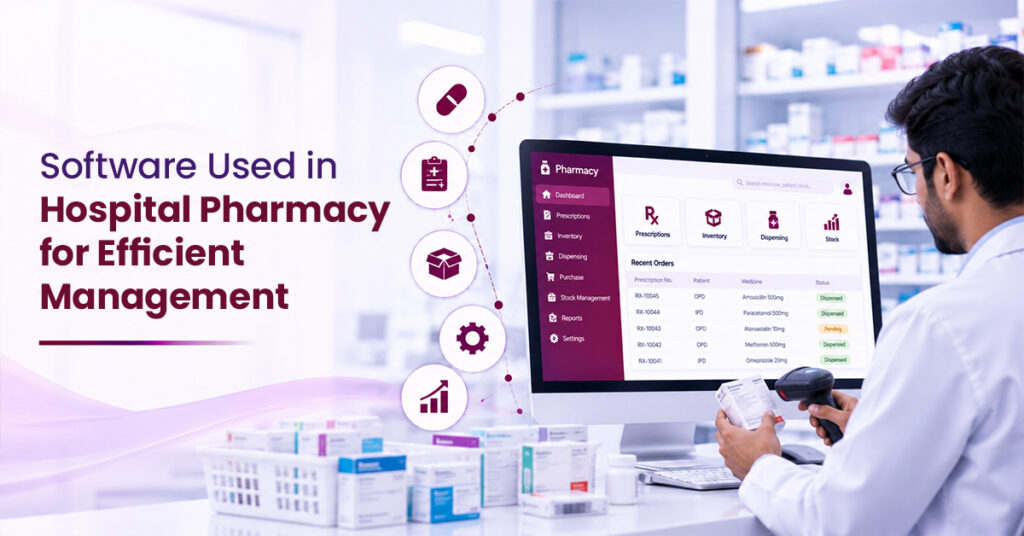
This is the core of the pharmacy. A pharmacy management system handles dispensing, labelling, stock records and reporting. It keeps a full history of every medicine issued, which makes audits much easier.
2. Electronic Prescribing and Medicines Administration (EPMA)
EPMA lets doctors prescribe medicines on screen instead of on paper. Pharmacists can then review orders straight away. Nurses record each dose given at the bedside, so everyone sees the same, up-to-date information.
3. Inventory and Stock Management Software
Running out of a vital medicine is dangerous, but overstocking wastes money. Inventory software tracks stock levels in real time, sends reorder alerts and flags items close to their expiry date. This is one of the most useful kinds of software used in pharmacy for controlling costs.
4. Automated Dispensing Systems
Automated dispensing cabinets and pharmacy robots store medicines securely and release them only to authorised staff. Systems from providers such as BD Pyxis and Omnicell link with the main pharmacy software. As a result, they cut picking errors and keep a clear record of who took what and when.
5. Clinical Decision Support Tools
These tools check prescriptions against safety rules in the background. They warn staff about drug interactions, allergies, wrong doses and duplicate treatments. They function as an untiring oversight layer, continuously monitoring for discrepancies.
6. Barcode Scanning Software
Barcode medication administration helps staff confirm the “right patient, right drug, right dose, right time”. A quick scan at the bedside can stop an error before it reaches the patient.
7. Billing and Reporting Software
Pharmacy billing tools link dispensed items to patient accounts and insurance claims. Reporting dashboards show usage trends, spending and compliance data, which helps managers make better decisions.
Software Used in Pharmacy: Hospital vs Retail
Many people assume the software used in pharmacy is the same everywhere. In reality, hospital systems are more complex. A retail pharmacy mainly needs dispensing, stock and sales tools. A hospital pharmacy must also handle ward supplies, inpatient charts, sterile preparations, controlled drugs and links with the wider hospital system.
For this reason, hospital pharmacy software should connect with the electronic patient record or a hospital management system (HMS). When systems share data, staff avoid retyping information, and errors drop.
Final Thoughts
Ezovion stands out as a premier partner for hospital pharmacy management by bridging the gap between clinical safety and operational precision. Its AI-powered, cloud-based platform is engineered to eliminate traditional bottlenecks through synchronized multi-location inventory tracking, automated rack-level management, and real-time expiry and low-stock alerts that prevent costly drug wastage.
By unifying digital e-prescriptions, indent approvals, automated billing, and bedside dispensing workflows, Ezovion enables your pharmacy to prevent dispensing errors, maintain airtight regulatory compliance, and speed up turnarounds across departments. Upgrading to Ezovion frees your pharmacists from tedious administrative friction so they can focus on high-impact clinical care and overall revenue growth.
Pharmacies sit at the heart of patient safety, and the right technology makes their work safer and smoother. From core management systems to barcode scanning and decision support, the software used in hospital pharmacy brings accuracy, speed and control to every step.
Now you know what software is used in hospital pharmacies and why it matters. If your hospital still relies on manual processes, now is a good time to explore a connected pharmacy system. Start by listing your biggest daily challenges, then match them to the features above. Small, well-planned steps can lead to safer care and real savings.